

The Identity Gap
On why great coffee isn’t enough to make people want to belong to your brand

Welcome to issue #005 of Black Sheep. Each week, I break down real brand decisions, the ones that build a business and the ones that quietly kill it. Written for leaders who believe clarity is a competitive advantage.
Your coffee is great. Your merch needs to catch up.
I didn’t arrive at that thought all at once. It crept in slowly, across visits to coffee bars, conversations with founders, and the quiet observation of what people actually chose to take home. Not bags. Not brewing gear. The things they wore, the things they carried, the things that stayed visible after the cup was empty. I started noticing the gap between what brands obsess over and what customers actually attach themselves to. Coffee quality has never been higher. Roasters are more skilled, sourcing is more transparent, equipment is gorgeous. And yet, most brands still feel interchangeable once you step outside their store.
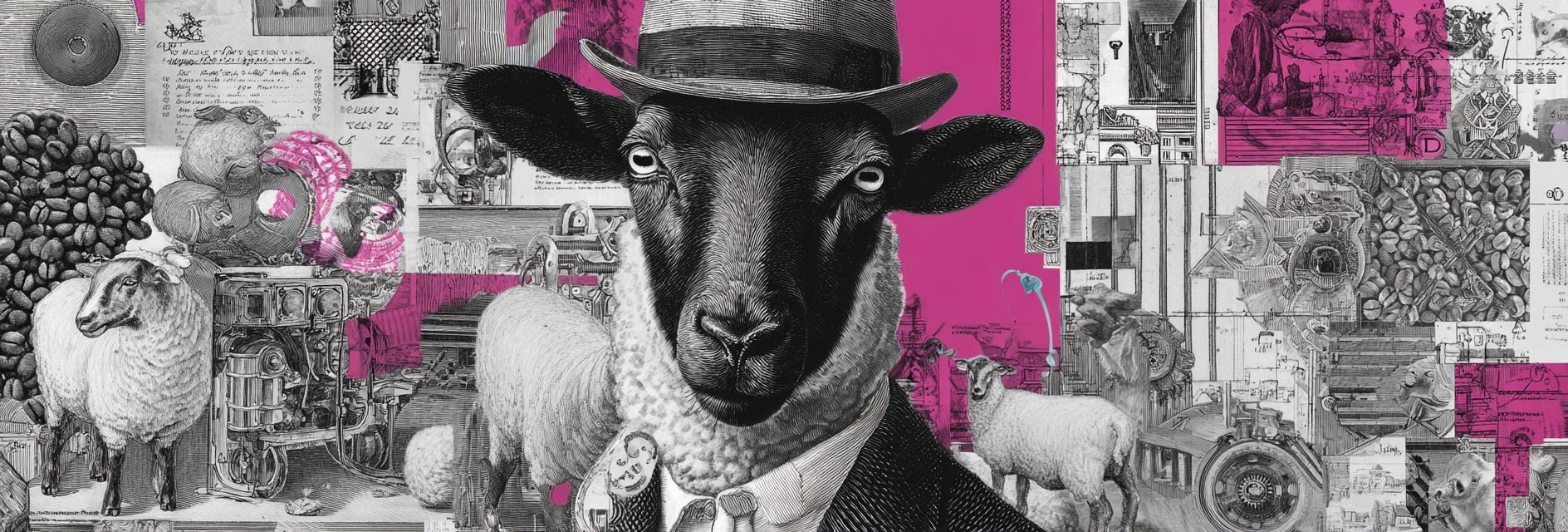
It made me wonder why some brands become cultural artifacts while others stay stuck on the shelf. The answer isn’t quality. It isn’t even marketing, at least not in the way most people think about it. It’s merch. Not the kind you throw in as a freebie or leave folded by the register, but the kind people actually want. The kind that signals something. The kind that makes someone feel like they belong to a world, not just a product.
When I look outside coffee, the pattern becomes obvious. The Masters has one of the most tightly controlled brands in sports. Their merchandise is legendary, not because it is loud, but because it is restrained. Classic. Almost stubbornly anti-modern. You cannot buy it online. You have to be there. That constraint creates obsession. Trader Joe’s turned a canvas tote into a collectible. People line up for it, trade it, post it. A grocery bag became something worth chasing. Yeti built an identity around the outdoors. Every hat, every tumbler, every bag reinforces a version of the customer that already exists in their mind. You are not buying a cooler, you are buying confirmation of who you think you are. Liquid Death pushed this even further with heavy metal aesthetics, humor, and objects that feel intentionally excessive. They understood that their audience does not just want water. They want to belong to something that feels different from everything else on the shelf.
These brands are not treating merch as a revenue stream. They are using it as a positioning tool, a way to turn transactions into identity and a way to make the brand visible when the product is no longer in someone’s hand. Coffee, for the most part, has not caught up.
I started paying closer attention to the brands that have. Not the ones printing logos on blanks, but the ones building something people actually want to wear, collect, and show off. BIGFACE is one of the clearest examples. What started as a joke in the NBA bubble now sits somewhere between a coffee brand and a cultural signal. The aesthetic leans minimal and elevated, the drops feel intentional, and it does not feel like a coffee brand trying to sell merch. It feels like a lifestyle brand that happens to include coffee.
Proud Mary brings a completely different energy. Bold, colorful, almost skate-adjacent. You recognize it before you see the logo because the visual language is consistent across everything they touch, from packaging to space to apparel. Sey takes the opposite approach. Quiet, minimal, almost editorial. It does not ask for attention, it signals taste. It feels like something you would find in a concept store rather than a café. Verve has evolved into something more expansive, where the California influence is clear in surf, outdoors, and movement. The merch extends the environment they have built in their cafés, making it feel like opting into a lifestyle rather than buying a product.
Dayglow leans into experimentation with shifting graphics and collaborations that rotate frequently, creating something that feels alive and constantly in motion. Onyx treats merch like product design. Books, ceramics, apparel, packaging. Nothing feels like an afterthought, everything feels intentional and almost collectible. La Cabra sits at the other end of the spectrum with a restrained, minimal, precise approach that feels closer to Muji or COS than a traditional coffee brand. The alignment between product, space, and merch is tight. DAK embraces something more playful with bright colors and social-first design, built to be photographed and shared so that merch becomes content as much as it is product. And then there are models like Native Coffee Club, where merch is not even a standalone purchase but part of an ongoing relationship, bundled into subscriptions that reinforce belonging over time.
Across all of these, the pattern is the same. The brands that are getting this right are not asking how to sell more merchandise. They are asking what role merchandise plays in the identity of their customer. Most coffee brands are still treating merch as an afterthought, a line item, something to fill space near the register. That framing misses the point entirely. Merch is where the brand leaves the café. It is how someone carries you into their daily life. It is how a private experience becomes public.
A tote bag is not a bag, it is a signal.
A hat is not a hat, it is an identity marker.
A ceramic mug is not a mug, it is a ritual that repeats every morning.
When someone chooses to wear your merch, they are making a statement, not about your coffee but about themselves. They are aligning with you in a way that goes beyond taste.
The industry likes to believe the problem is differentiation, that if the coffee is better, the story clearer, the sourcing more transparent, the brand will stand out. What I keep coming back to is something else. It is not a differentiation problem, it is an identity problem. Most brands are still trying to convince people their coffee is worth buying. The brands that are winning are giving people something worth belonging to.
That shift changes everything. I have started noticing it in my own thinking. Where I used to evaluate brands based on product and positioning, I now find myself asking a simpler question. Would I wear this? Would I carry this? Would I want to be seen with this in public? It is an uncomfortable filter because it removes a lot of the language the industry hides behind and forces clarity. There are brands I respect deeply that I would never wear, and that realization says more than any tasting note ever could.
So I have been paying attention to what I respond to, not just what I admire intellectually but what I feel pulled toward physically. What I would choose without overthinking it. It is a small shift, but it has changed how I see the landscape. Your merch strategy reveals your brand strategy. If it feels generic, you are positioning yourself as a commodity whether you intend to or not. If it feels considered, specific, and desirable, you are building something with gravity.
Because at this point, good coffee is assumed. It is the baseline. It is not what creates attachment. What creates attachment is meaning, and merch is one of the clearest expressions of that meaning. The brands that understand this are building something that extends beyond the cup, something people want to own, display, and carry into their lives. The ones that do not are still selling coffee, just coffee, in a market where everyone sells coffee. And that gap is only going to widen.
What I keep coming back to is a simple tension. If quality disappeared from the conversation tomorrow, what would be left of your brand that someone would still choose to wear?
Leave a comment. I respond to every one.
If you enjoyed this read, the best compliment I could receive would be if you restacked this for your readers. Thank you so much for a bit of your valuable time today.
Thanks for reading Black Sheep. Subscribe for free to receive new posts and support my work.
Over the past 5 years or so I’ve been part of the team at Madrinas. We’re a unique online coffee and tea brand. Merch is always a hard conversation for us. We also do a lot of collaborative merch well but always get stuck on how we make our own merch great and useful for people. Open to constructive criticism!